National Startup Awards Student Innovator Guide for 2026
The National Startup Awards Student Innovator category is open to eligible school and undergraduate students. The government announced November 20, 2026 as the deadline. Students can enter individually or in teams of up to four. The award guidelines call for a prototype, working model, minimum viable product or proof of concept that demonstrates how the project addresses a problem.
Start at the Startup India awards portal and select the Student Innovator or Aspiring Entrepreneur category. The government launch notice gives the November 20 deadline. Check the live submission form for any change to the published timetable.
Who can enter the National Startup Awards Student Innovator category?
The student guidelines identify four groups, from Budding Innovators to Emerging Entrepreneurs. The age limits in the published tables overlap at some boundaries. If one student sits on a boundary, or students in a team span two age groups, use the form and detailed rules to confirm the appropriate group. The student route does not require DPIIT startup recognition.
The government announced a prize pool of ₹25 lakh for the student category, split among winners and runners-up in the four groups. A team’s group determines the prize allocation it should look at. The programme includes students working on projects of very different sizes, and the evidence should reflect the stage of the work. A classroom prototype can demonstrate a specific result even when the project has yet to reach users outside school.
How to show what your prototype does
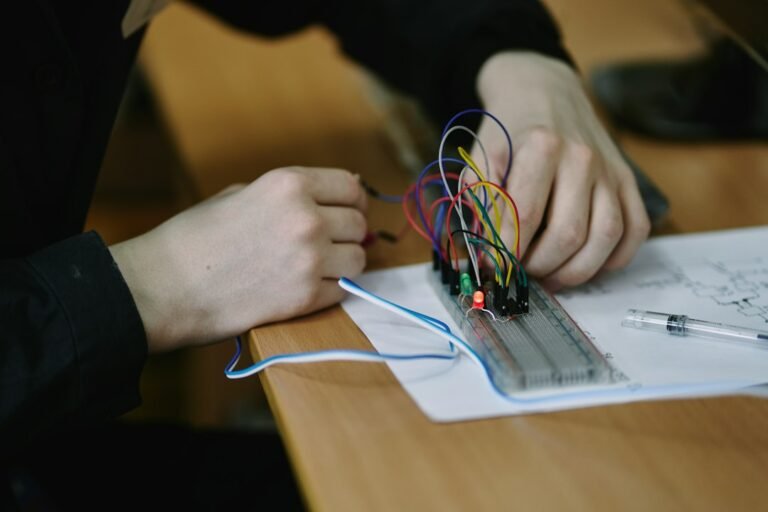
Begin with one person and one problem. If a school team built a low-cost tank alarm, it could explain who checks the tank today, why they might miss an overflow and how the device makes the problem visible sooner. Show the sensor and demonstrate what happens when the water rises. Follow the demonstration with a short table showing the conditions under which the alert worked and when it came too late.
A software team can show a similarly short sequence. For a bus information app, show how a pupil finds the right route and sees a test update. Explain where that update comes from. A classroom simulation and a trial with actual route data offer different evidence. Describe the stage accurately, then explain what would be needed to test the next version.
Write down what you changed after the first test. A photograph of the initial layout and a note about the change can make the engineering clearer. If a reviewer sees only the final version, it can be difficult to tell how the team reached that design or where a limitation still exists.
Give prospective reviewers a scale for your result. For an alarm, that could be the time between the alert and an overflow in a model tank. If you repeat the trial at different fill rates, describe the conditions beside each result. A measurement with its context is easier to assess than saying the prototype was fast.
Before sending the application
Write a summary that identifies the user, the problem, what the team built and one result. Ask someone unfamiliar with the project to read it and point to the result. If they can explain back what the model does, the summary is probably clear enough to support the demonstration.
In a team, agree who will submit and verify every member’s details. Keep the source documents and a copy of the submission. If the form asks how the project could expand, use a specific example. A second school pilot might require a trained teacher, a small set of parts and a way to compare results across classrooms. Bootpoot’s CBSE Science Exhibition guide has separate examples for planning a repeatable test.
Illustrative photo by Tool., Inc on Unsplash.