CBSE Science Exhibition 2026: Registration Closes November 14
School registration for the CBSE Science Exhibition 2026 closes on Saturday, November 14. Affiliated schools must register online, submit project details and pay the fee through the exhibition portal. Students enter through their school. If your team has been selected, ask the coordinating science teacher whether your details and project title have been entered and whether the school has completed payment.
The official CBSE circular, Acad-69/2026, sets out the rules for the 2026–27 exhibition. It runs first at regional venues and then at national level, with events planned between November 2026 and January 2027. Regional dates and venues are communicated separately.
Who can enter the CBSE Science Exhibition 2026?
There are two groups. Category I is for Classes 6 to 8, and Category II is for Classes 9 to 11. A team has a maximum of two students from the same category and one science teacher as mentor. A school can register up to two teams. A student in Class 8 and one in Class 9 fall in different groups, so the school should check team composition before submitting their names.
The school signs in to the CBSE Science Exhibition registration portal with its LOC credentials. It verifies the school information, adds team and mentor details, and reviews the entry before final submission. The circular lists a ₹3,000 registration fee and directs schools to the online payment gateway. Its registration guide says the portal calculates the payable amount based on the number of teams, so check the amount on the payment screen.
Take a final look at the names, project title and sub-theme before clicking submit. CBSE says the registered participants and mentor stay the same from the regional round to the national round. It also says the title and sub-theme cannot be changed later. A specific title makes it easier for both the team and the judges to understand the question the exhibit addresses.
What kind of science project fits?
The seven sub-themes cover artificial intelligence, green energy and conservation, mathematical modelling, health and sanitation, indigenous agriculture, rural transformation and disaster management. The board accepts investigation-based studies, applications of scientific principles and designs that solve a problem. It also asks teams to use eco-friendly materials.
For an environmental project, two students might compare how quickly water drains through soil with and without a layer of dry leaves. They could use the same amount of soil and water for each trial, record drainage time and repeat the measurement. A simple chart showing every trial would let a visitor see the variation. The students could then explain what their model can tell them about runoff and what would need testing on a larger plot.
CBSE gives creativity and imagination the largest single weight, at 20%. Originality, scientific approach, craftsmanship and educational value each carry weight as well. When rehearsing the display, ask one person to explain the problem and the other to demonstrate the measurement. Have both students ready to answer what they changed, what they kept constant and how they would improve the experiment.
Photograph the setup and keep a record of the raw measurements. If the model needs to travel, bring that record so the team can still explain the investigation if a moving part comes loose.
What schools should check after registration
Keep the registration and payment records, monitor the CBSE Academic site for venue notices, and collect parent consent ahead of travel. The circular places travel, lodging and other participation expenses with the school or team. Regional judges shortlist exhibits for national consideration. The circular gives fourteen as the expected number per venue, with room to adjust based on the quality of entries.
For a separate school-led activity this month, see Bootpoot’s CBSE Expression Series guide. It has a different age range, submission process and timetable.
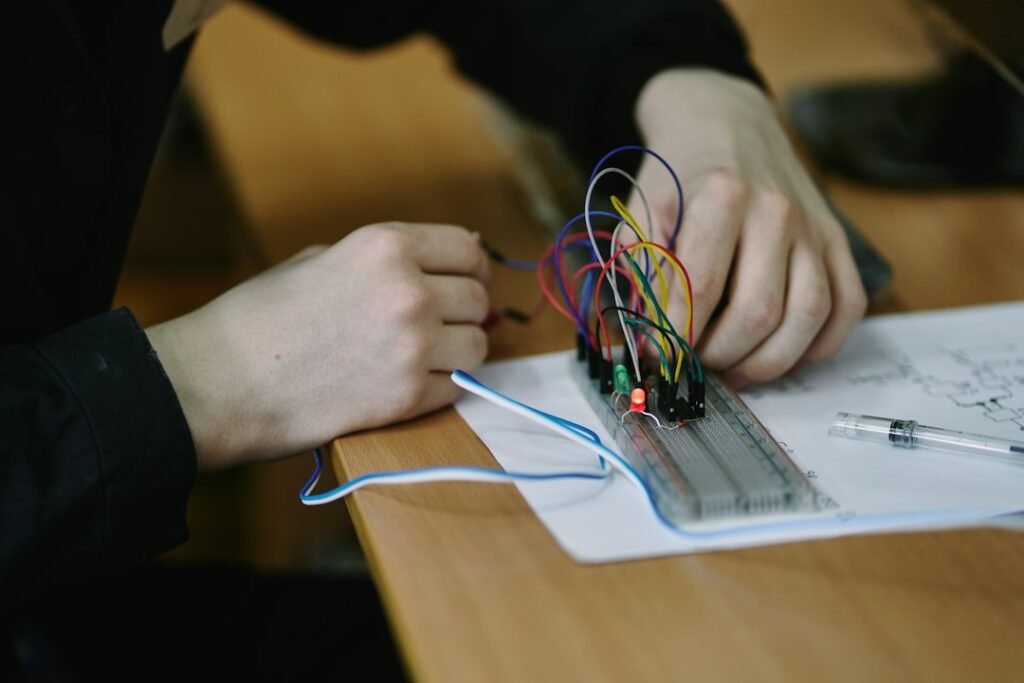
Illustrative photo by Maxim Tolchinskiy on Unsplash.