UPI October 2026 Transactions Cross 25 Billion
UPI October 2026 transactions reached 25,466.70 million, equivalent to approximately 25.47 billion payments, according to NPCI’s monthly statistics. The published value was ₹31,52,929.46 crore, or about ₹31.53 lakh crore. The numbers put another busy month of digital payments into perspective for shops that now handle much of their checkout through a phone and a QR code.
For a small business, the practical follow-up is to examine its own payment records. National growth gives context. Your transaction history shows where customers encounter delays and where reconciliation takes too much time.
UPI October 2026 transactions in context
NPCI’s monthly UPI table lists September volume at 24,068.38 million and value at ₹29,37,396.67 crore. October’s figures therefore represent roughly 5.8% more transactions and 7.3% more value than September. Those percentages are calculated from the two published rows, with rounding.
October also has 31 days against September’s 30. Dividing monthly volume by days gives around 821.5 million transactions per day for October and 802.3 million for September. On that basis, daily volume increased about 2.4%. This is a useful example of why a bigger monthly total deserves a second calculation.
Separate payment activity from sales performance
If you run a shop, start with the number of completed customer orders and their total sales value. Then compare the portion paid through UPI, cash and other methods. An increase in UPI receipts can reflect customers switching payment methods even when the number of orders changes little.
A simple spreadsheet can include date, order reference, amount, payment method and reconciliation status. Keep business records separate from personal transfers. This makes it easier to understand whether a busy payment screen also corresponds to a stronger trading week.
Make reconciliation a short daily task
Choose a quiet time after the main rush and compare recorded orders with completed payments. Investigate exceptions while the person who handled the sale still remembers the circumstances. A small daily review is easier to manage than an end-of-month pile of screenshots.
Use a consistent reference for refunds and cancelled orders. For example, keep the original order reference beside the refund record and write a short reason. If several staff members handle the counter, agree who records an exception and who confirms that it has been resolved.
Review what happens when checkout stalls
Walk through the experience from the customer’s side. Is the QR code easy to scan under the lighting at your counter? Can the customer confirm the intended recipient? Does the staff member know where to check the transaction status in the merchant’s own system?
Write a short process for unresolved payments and make it accessible to everyone working the till. The process should identify what details to record, how to check the status and who is responsible for following up. NPCI’s UPI frequently asked questions provide general background, while your bank or payment provider supplies the support route for your account.
Track the questions customers keep asking
Keep a weekly tally of repeat problems instead of relying on the most memorable complaint. You may find that one counter has poor connectivity, one printout is damaged or new staff need help reading the payment dashboard. Those findings give you specific changes to try.
After making a change, compare another week of exceptions using the same method. A lower number of interrupted checkouts is easier to evaluate when the records were kept consistently before and after the change.
Turn a national headline into a local check
October’s figures demonstrate the scale at which UPI operates. For an individual business, the immediate opportunity is a clearer checkout and cleaner books. Compare your own completed orders, payment mix and unresolved transactions before drawing conclusions about customer demand.
For the wider connection between ordering, fulfilment and record-keeping, read Bootpoot’s discussion of e-commerce in the value chain. The same discipline applies whether customers buy across a counter or place an order online.
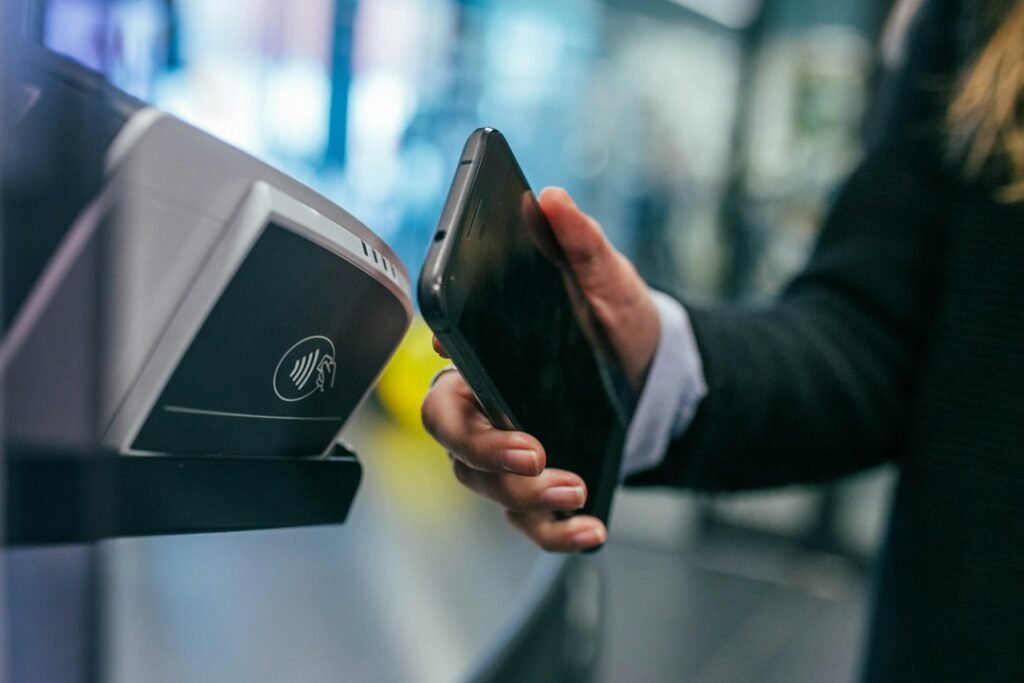
Illustrative photograph. Photo by Jonas Leupe on Unsplash.