Public EV charging in India: What to check before your next highway stop
The most important question about public EV charging on a highway comes after you find a pin on the map. Can you actually start a session there? On November 20, India’s Society of Indian Automobile Manufacturers held its first National EV Charging Day in New Delhi. Heavy Industries Minister H. D. Kumaraswamy asked the industry to look beyond the count of stations and consider whether drivers can find, use and pay for a working charger.
That distinction matters most on a journey where a single stop determines whether you reach the next town. The meeting was an industry dialogue backed by the Ministry of Heavy Industries. It gave drivers a useful set of questions to ask. It did not certify individual stations or announce that every network would accept the same payment.
Public EV charging starts with the entrance
Look up the actual approach road. A charger on the other carriageway can be close on a map and a long way away by road. A hotel charger can be inside a gated car park. If a stop will decide your route, check opening hours and access with the operator or host. Ask where to turn in, especially if you expect to arrive after the shops have closed.
Then look at the individual connector. A location with several pins may have only one plug your vehicle can use. Find the connector type in the car’s handbook and match it to the operator’s listing. Save the station name and support number while you have a signal. If a charger fails, its identifier gives the help desk something more precise than a roadside landmark.
A power rating is only the starting point
A station’s advertised kilowatt figure describes power. The kilowatt-hours billed during a session describe energy. Suppose a car needs another 20 kWh. At a steady 40 kW, transferring that energy would take about half an hour. That is a piece of arithmetic, not a promised stop time. The actual rate can change during a session, and time spent waiting for a plug comes on top.
For a realistic itinerary, check what the car can accept, how much charge you expect to arrive with and whether another vehicle is already using the station. If the car displays an estimated finish time once connected, use that estimate to revise the next leg. Planning lunch around an advertised peak figure is an easy way to leave everyone waiting.
Work out how the session starts and ends
Open the operator’s payment instructions before relying on the stop. Check whether you can pay directly or must register in an app, which charges are shown before starting and how to end the session. Parking fees can be separate. If someone else in the car is organising payment, agree who will retain the receipt and check the amount debited.
One useful test on a familiar route is to buy a small amount of energy while you still have enough range to leave. You learn where the entrance is, what the screen asks for and how the receipt looks. A first attempt on a rainy night with little range left is a much less forgiving lesson.
Choose a backup you can reach
Save a second station along the route and check that you can reach it from the first. Two chargers behind the same locked gate share the same weakness. Two locations on opposite sides of a toll road can require different approaches. Tell your passengers where you will make the decision to stop or continue.
SIAM’s account of the November 20 dialogue describes the minister’s call for reliable service beyond major metros, including tourism routes and smaller towns. Those are precisely the trips on which a backup can matter most. For the separate question of where the car will charge between journeys, our guide to home charging in an apartment covers permissions and installation before you book.
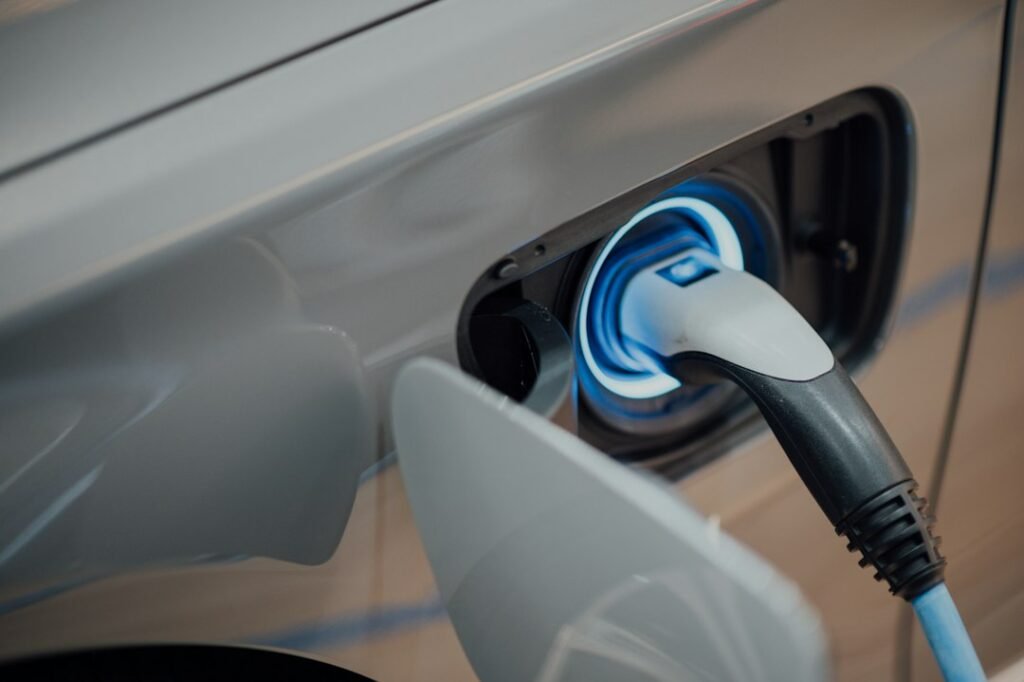
Illustrative EV charging photograph by CHUTTERSNAP on Unsplash.